


Surface & Dermal Anchor Piercing in Calgary
Single-point dermal anchors, microdermals, and surface bar piercings – designed for carefully chosen locations, with an honest focus on longevity, tissue health, and scar-minimizing outcomes.
What are dermal anchors, microdermals, and surface piercings?
“Dermal piercings,” “microdermals,” “surface anchors,” and “surface piercings” are often used interchangeably online, but they describe two related, yet different families of piercings:
-
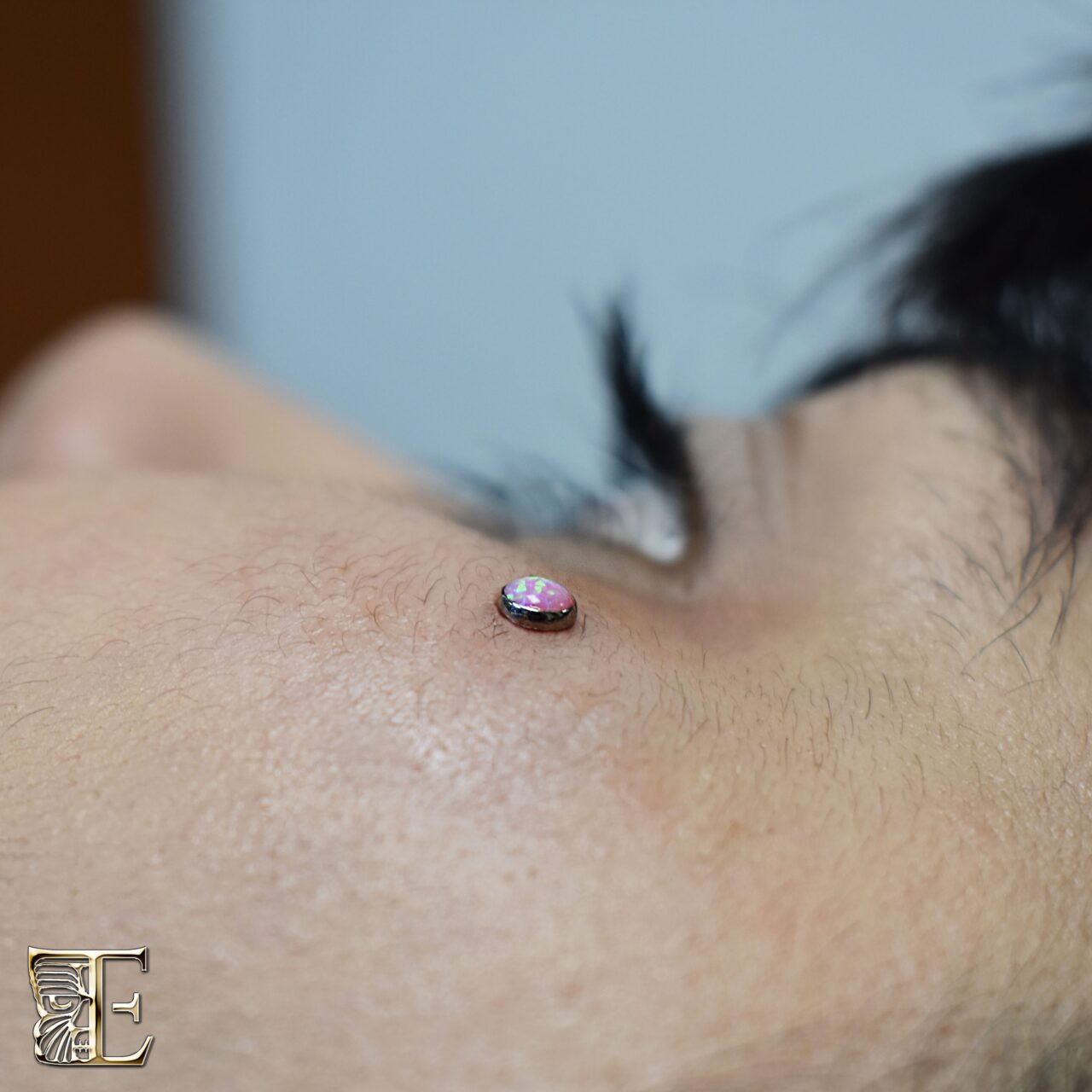
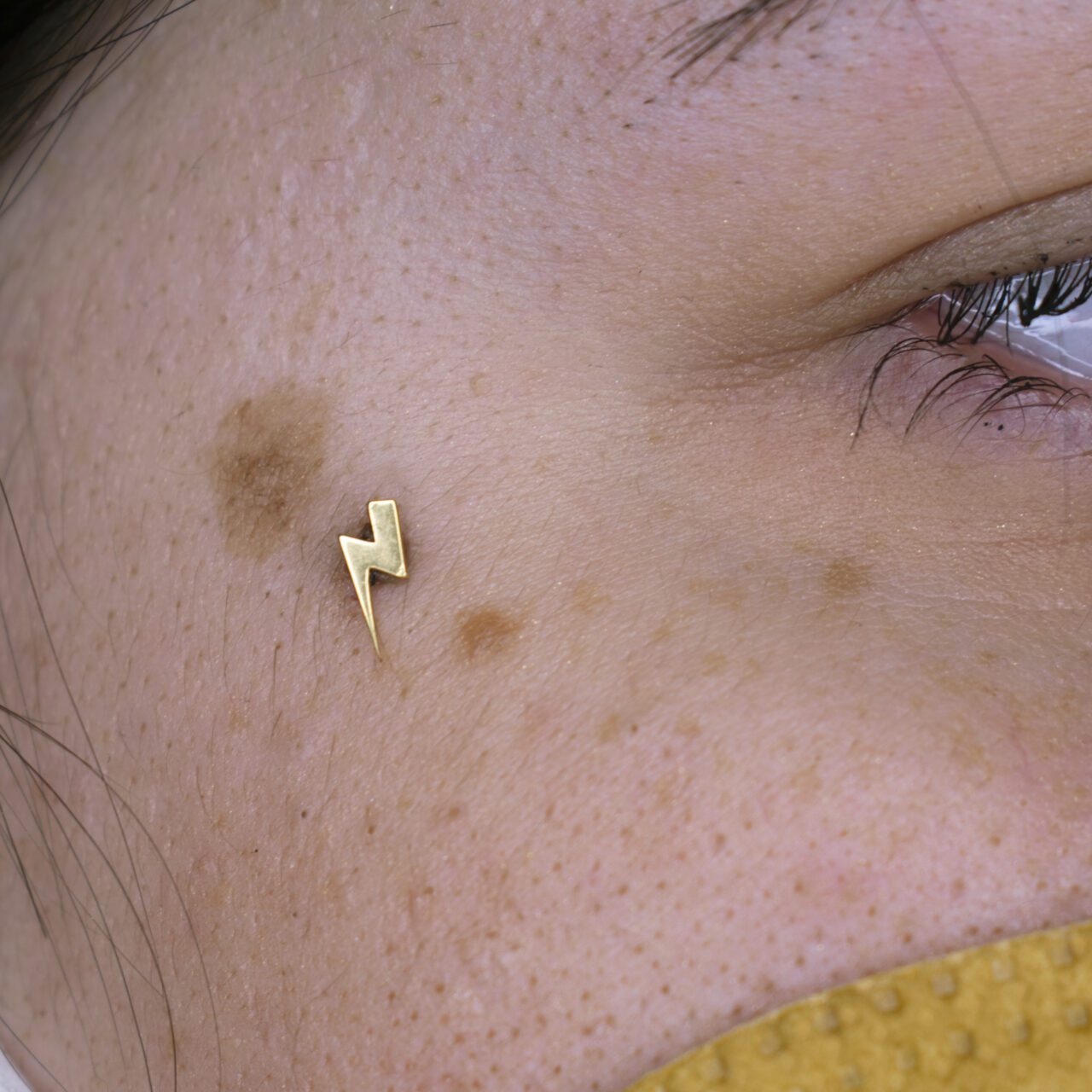
Dermal anchors / microdermals / surface anchors
Single-point piercings where a small anchor (often shaped like a foot or base) sits under the skin, and a single decorative top is visible on the surface. -
Surface piercings with surface bars
Piercings with an entry point and an exit point, connected by a specially shaped surface bar that lies flat under the skin. You see two ends of the jewelry instead of one.
Both systems are designed for flat or gently curved areas of the body where a standard straight barbell or ring would be prone to migration or rejection. They require excellent jewelry design, proper depth, and careful site selection to last as long as possible and leave the least scarring when retired.
At Tribal Expression in Calgary, we approach these piercings as advanced procedures. We use implant-grade titanium, refined anchor and surface-bar designs, and more than two decades of experience in dermal and surface work to guide every decision we make about placement and longevity.
Our history with dermal anchors & microdermals
Long before dermal anchors and microdermals became social media trends, Tribal Expression was already working with early anchor-style jewelry, refining techniques, and teaching safe placement principles. Over the years, we have been recognized as one of the forefathers of dermal anchor work in the piercing community, especially in Western Canada.
As the industry evolved, we invested heavily in understanding the origins of dermal anchors, improving base designs, and standardizing safer approaches. To support better education and clearer language around these piercings, Tribal Expression secured and maintains multiple dermal-focused domains, including:
- dermalanchor.com, dermalanchor.net, dermalanchor.org, dermalanchor.to, dermalanchor.cc, dermalanchor.ca
- microdermalanchor.com, microdermalanchor.net, microdermalanchor.org, microdermalanchor.cc, microdermalanchor.ca
Owning these domains isn’t about collecting URLs—it reflects how early and how deeply we were involved in the development, discussion, and education around dermal anchor and microdermal piercing standards. Our goal has always been the same: bring clarity, safety, and realistic expectations to a style of piercing that the internet often oversimplifies.
When you come to Tribal Expression for dermal or surface work, you’re not just getting a trendy piercing—you’re drawing on decades of early dermal anchor design, troubleshooting, and teaching experience.
Common areas for dermal anchors & surface piercings
With the right anatomy, anchors and surface bars can be beautiful in specific, low-friction areas. Some of the more successful placements include:
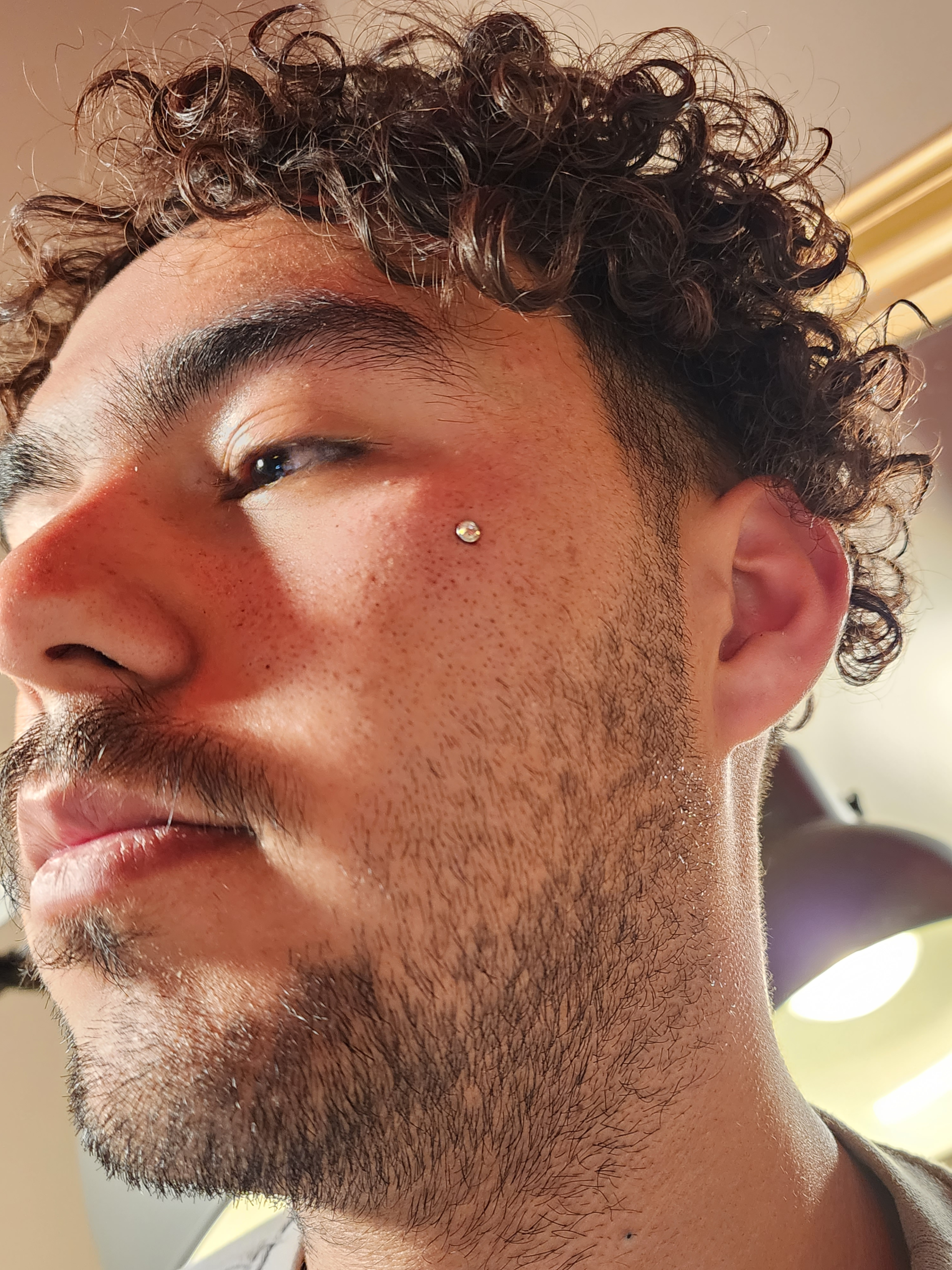
- Cheekbone accents (carefully chosen, away from major movement lines).
- Collarbone and upper chest (off the bra strap line and pressure points).
- Nape of the neck and upper back (using surface bars in suitable anatomy).
- Hip or lower abdomen in low-friction zones (for some body types, with clear lifestyle discussion).
- Decorative “constellations” or small clusters in flat, protected areas.
Not every idea seen on social media translates to a safe, long-lasting piercing. Some of the most requested placements are also the shortest-lived (for example, areas that bend, fold, or see constant waistband, bra strap, or backpack pressure). Part of our job—especially as early adopters of these techniques—is to say “no” when the long-term outcome will likely be poor.
Am I a good candidate for dermal or surface piercings?
Candidacy for dermal anchors and surface bars depends heavily on anatomy and lifestyle. During your consultation, we assess:
- Skin thickness and mobility – We need enough stable tissue to support the jewelry without cutting through or migrating quickly.
- Underlying structures – We avoid locations with major tendons, joints, or sharp bone edges under the skin.
- Movement patterns – Areas that fold or stretch with every step or breath will shorten the piercing’s lifespan.
- Contact and friction – Waistbands, bra straps, backpacks, work belts, and sports gear are all factors.
- Healing history and scarring tendencies – Clients prone to keloids or heavy scarring may not be ideal candidates.
If a particular spot is likely to reject quickly or leave an unnecessarily large scar, we’ll explain why and either recommend a better placement or suggest a different type of piercing altogether. This is one of the advantages of working with piercers who have seen the full life cycle—from brand new dermal to retirement—thousands of times.
How much do dermal anchors and surface piercings hurt?
For most clients, these piercings feel briefly sharp but manageable. The sensation depends on the location and whether we are placing an anchor or a surface bar. Typically you can expect:
- A quick, focused pinch or pressure as the pocket or channel is created.
- A short wave of warmth or mild soreness afterward.
- Some tenderness when moving or stretching the nearby area during early healing.
These are advanced piercings, but the experience itself is very controlled. The more important piece is what happens over the next weeks and months: how well the area is protected from bumps, pressure, and snagging.
Healing time for dermal anchors and surface bars
Healing times vary by location, but in general:
- Dermal anchors / microdermals: often 3–6 months for full stabilization.
- Surface bars: often 6–9 months or longer, depending on placement and movement.
Typical healing pattern:
- Weeks 1–4: Mild swelling, tenderness, and some crust buildup at the entry points.
- Weeks 4–12: The piercing slowly becomes less reactive but may still flare if bumped or snagged.
- Months 3–9: The anchor or bar settles in or, if the body is not happy, begins to show signs of migration or rejection.
These piercings should always be considered as having a finite lifespan. Even with ideal placement, excellent jewelry, and careful aftercare, some will gradually work their way out over time. Our goal, based on years of early dermal and surface piercing experience, is to maximize their healthy lifespan and minimize scarring when they eventually retire.
Aftercare for dermal anchors & surface piercings
The key to successful dermal and surface piercing healing is calm, consistent care and avoiding mechanical trauma.
Cleaning with hypochlorous acid
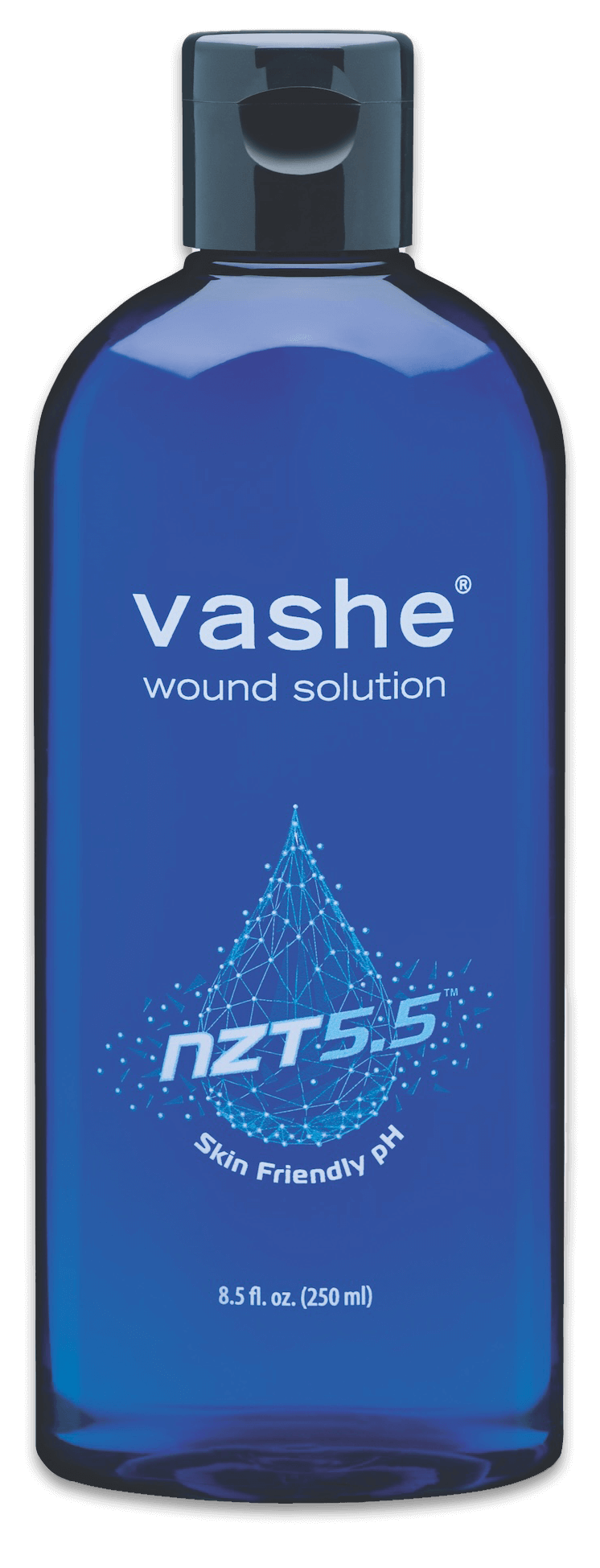
- Use our recommended hypochlorous acid aftercare spray 1–2 times daily, or as directed.
- Spray generously over and around the piercing so the solution reaches all edges of the anchor or bar exits.
- Allow it to sit for 30–60 seconds to loosen dried discharge.
- Gently pat dry with a clean, disposable paper towel – never scrub or twist the jewelry.
Protecting the area from pressure & snagging
- Avoid tight clothing, belts, waistbands, bra straps, or backpack straps over the area.
- Be careful when changing clothes so fabric doesn’t catch the jewelry.
- Use extra caution with pets, small children, or seatbelts around fresh piercings.
- Do not cover the piercing with adhesive bandages long-term unless specifically instructed (trapped moisture can be a problem).
Things to avoid
- Do not twist, spin, or “unscrew” the jewelry during healing.
- Avoid applying makeup, heavy lotions, or self-tanner directly over the piercing until it’s stable.
- Do not attempt to change dermal tops or surface bars yourself in early healing.
- Never attempt to remove an anchor yourself – this can increase scarring and risk.
If you notice persistent redness, a “pulled” look, or the anchor or bar becoming more visible under the skin, contact us promptly. Early adjustments or retirement can often prevent a worse scar.
What jewelry is best for dermal anchors and surface bars?
With these piercings, jewelry quality and design are everything. We only use implant-grade, APP-standard materials with smooth machining and polished finishes.
-
Dermal / surface anchors
Small, low-profile bases designed to sit comfortably under the skin, with threadless or internally threaded tops that can be changed once healing allows. -
Surface bars
Specially shaped bars (often with 90° or gentle curves) designed to sit flat under the skin, reducing pressure on the entry and exit points. -
Implant-grade materials
ASTM F-136 titanium, manufactured and finished to medical standards. Decorative ends may be titanium or solid gold for a fine jewelry look. -
Low-profile decorative tops
Especially for fresh piercings, we choose tops that won’t catch easily on clothing or towels.
Because Tribal Expression manufactures jewelry in Calgary, we can control the quality of the metal, the smoothness of the edges, and the exact dimensions of the anchors and surface bars—details that matter a lot for how these piercings heal and how long they last. Our history with early dermal anchor machining and design informs every piece of hardware we put into a client.
Migration, rejection & realistic lifespan
Even under ideal conditions, dermal anchors and surface bars have a higher chance of migration and rejection than piercings that go straight through tissue (like ears, nostrils, or navel). It’s important to understand:
- Some placements are “temporary art” – they may look great for a season but are not likely to last for years.
- Good anatomy and careful jewelry choice can significantly extend lifespan.
- Repeated trauma, pressure, or snagging will shorten lifespan and can increase scarring.
If we feel a particular placement is unlikely to age well or will almost certainly reject, we will say so. Our priority is long-term tissue health and minimal scarring, informed by decades of watching how dermal anchors and surface piercings behave over time—not just how they look on day one.
How we perform dermal & surface piercings at Tribal Expression
Your appointment typically includes:
-
Consultation & site selection
We evaluate your anatomy, discuss your work and lifestyle, and choose locations that offer the best balance between aesthetics, comfort, and realistic longevity. -
Placement & marking
We carefully mark the site(s) and have you check them in natural posture and movement so you can visualize how the jewelry will sit on your body. -
Visible sterilization
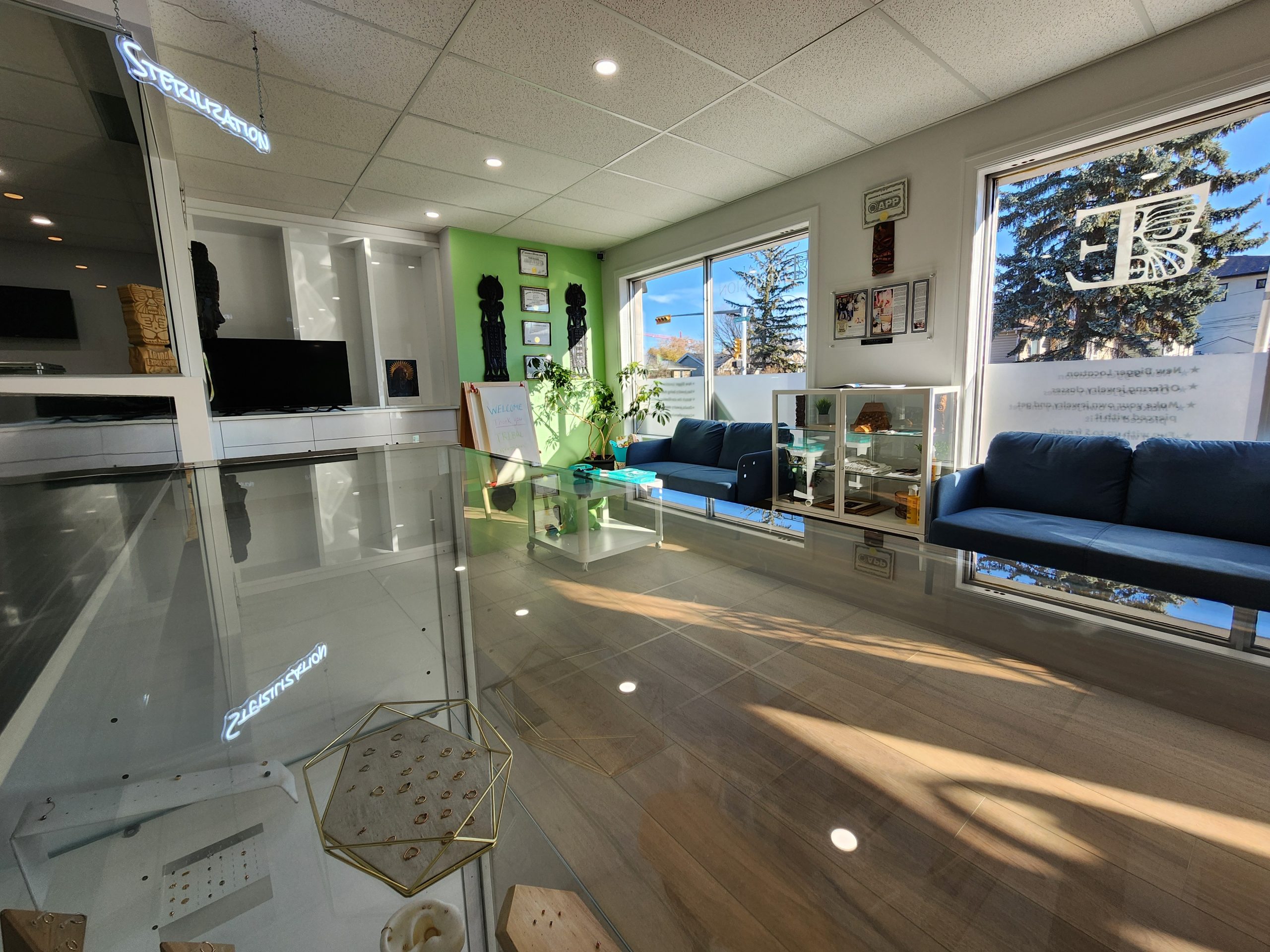
All jewelry, needles, and any tools are individually sterilized in a Statim 5000 cassette sterilizer that you can see running in our open sterilization room. -
Piercing process
A controlled pocket or channel is created for the anchor or bar, and the jewelry is placed in a single, smooth motion to minimize trauma. -
Aftercare, monitoring & retirement planning
We review written aftercare, healing expectations, warning signs of migration, and how to approach safe retirement if or when the piercing’s lifespan is coming to an end.
Why choose Tribal Expression for dermal anchors & surface piercings?
- Over 23 years of professional body piercing experience in Calgary.
- One of the early adopters and educators of dermal anchor and microdermal techniques.
- Ownership of multiple dermal anchor domains (including dermalanchor.com and microdermalanchor.com) reflecting our long-standing role in the education and history of these piercings.
- In-house manufacturing of APP-standard implant-grade titanium and fine gold decorative tops.
- Visible, individual sterilization for every piercing.
- An honesty-first approach to site selection, longevity, and scar potential.
- A calm, educational environment that prioritizes your long-term tissue health over short-term trends.
Ready to talk about dermal or surface piercings in Calgary?
If you’re curious about dermal anchors, microdermals, or surface piercings, the best first step is a consultation. We’ll look at your anatomy, talk realistically about lifespan and scarring, and design a plan that respects both your aesthetic goals and your body. You can book online, call the studio, or visit us to start the conversation.
Dermal & Surface Piercing FAQ
What is the difference between a dermal anchor and a surface bar?
A dermal anchor (or microdermal) is a single-point piercing with one visible top and a small anchor base under the skin. A surface bar has an entry and exit point with a specially shaped bar under the skin, so you see two ends of jewelry. Both are designed for flat areas but behave differently and are suited to different locations.
How long do dermal anchors and surface piercings last?
Lifespan varies widely by anatomy, location, jewelry, and lifestyle. Some last for years with minimal issues, while others slowly migrate and need to be retired sooner. They should always be considered higher-maintenance and less permanent than standard through-and-through piercings. Working with an early dermal specialist greatly improves your odds of a good outcome.
Do dermal piercings leave scars when removed?
Yes, some level of scarring is expected with dermal anchors and surface bars. With good placement, proper retirement, and your body’s cooperation, many clients are left with a small, flat mark. Poorly placed or repeatedly traumatized piercings can leave more noticeable scars, which is why site selection, jewelry design, and gentle removal matter so much.
Can I change the tops on my dermal or surface piercing myself?
Once healing is stable, some clients can safely change tops, but we strongly recommend having a professional handle the first few changes. Trying to change jewelry too early, or without proper tools and technique, can twist the base, disrupt the pocket, and increase the risk of migration or loss. Having an experienced dermal piercer handle adjustments is always the safer option.
Here at Tribal Expression, we implement the highest possible sterilization standards in Canada, the same standards you would see at a plastic surgeon’s office. We feel this is only right as any invasive procedure can be life-threatening if proper sterilization protocols are not met.
Piercing price: $40
+ the cost of jewelryJewelry Cost From $65
Minimum Age: 18 Gov Photo ID.
Minimum Age: 18 Gov Photo ID.
We ask that friends and family wait at a nearby coffee shop or in their car during the procedure. Please eat a light snack 30 minutes before your appointment.